Technology
Passed the ISO9001 quality system certification and the establishment of industrial drying industry alliance standards under the guidance of the Chinese Standardization Research Institute.
Passed the ISO9001 quality system certification and the establishment of industrial drying industry alliance standards under the guidance of the Chinese Standardization Research Institute.
- May 07, 2019 -
The second category is transmission materials, such as quartz, PTFE and so on. Microwave is penetrated by reflection part on the surface of such materials and rarely absorbed, so it can't or is difficult to be heated by microwave;
The third category is reflection materials, which are generally conductive materials such as metal iron blocks, graphite compacts, etc. It has reflection effect on microwave and can't be heated by microwave, but when iron is used as iron. When block, copper block and graphite block are processed into powder state, they can absorb microwave very well, and can rapidly rise to hundreds of degrees Celsius or even 1000 degrees Celsius in a relatively short time. Therefore, whether the material can be heated by microwave is related to the characteristics of the material itself, as well as the physical state of the material. The fourth kind of materials
is heterogeneous materials, which is one of the research hotspots in recent years. In the field of microwave metallurgy and material synthesis, the object of microwave heating is mostly two-phase or multi-phase heterogeneous materials, and its mechanism is very complex. The characteristic of this kind of material is that there exists local field enhancement effect under microwave irradiation, which can cause discharge and produce ultraviolet light to promote photocatalysis. This is a new mechanism of microwave-assisted catalysis.
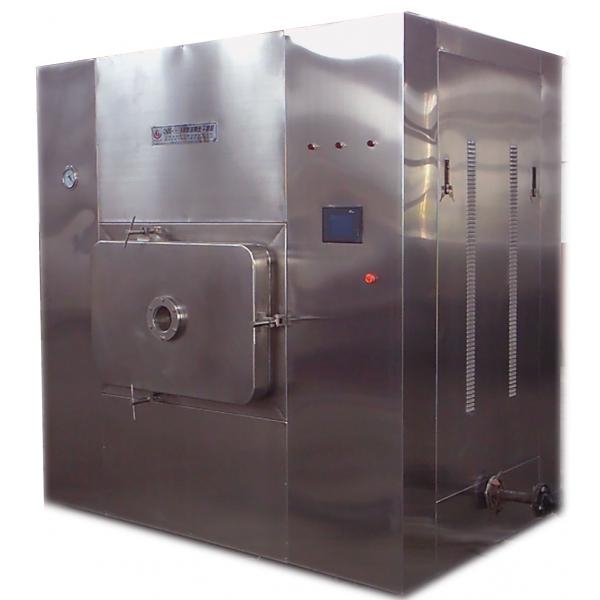
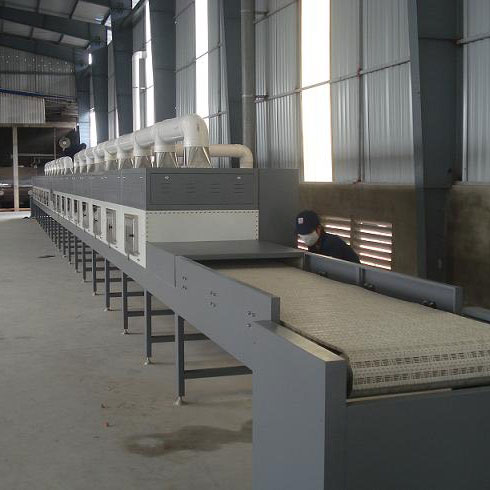
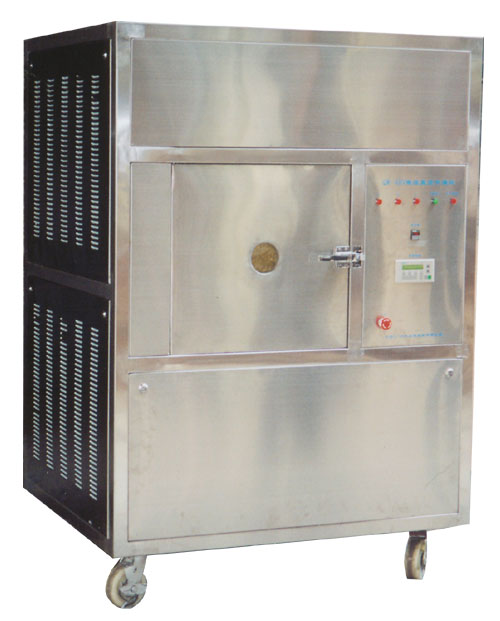
Microwave equipment is a new type of industrial equipment. Its energy-saving and environmental protection has been recognized by many enterprises. Enterprises with serious environmental pollution have begun to use environmental protection microwave equipment to replace drying and sintering equipment in traditional enterprises.
上一篇:Dryer technology is at the forefront of machinery industry 下一篇:Energy saving and environmental protection is the primary task of industrial drying equipment development