Technology
Passed the ISO9001 quality system certification and the establishment of industrial drying industry alliance standards under the guidance of the Chinese Standardization Research Institute.
Passed the ISO9001 quality system certification and the establishment of industrial drying industry alliance standards under the guidance of the Chinese Standardization Research Institute.
- May 03, 2019 -
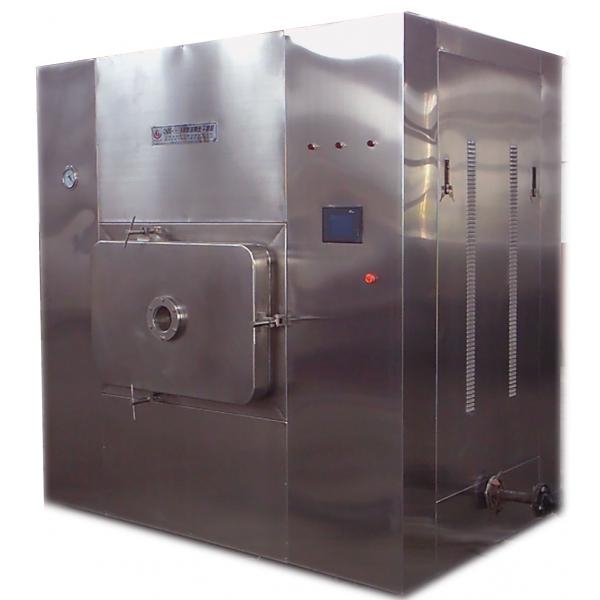
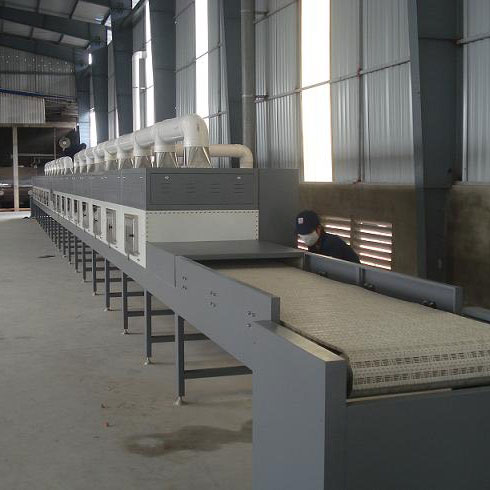
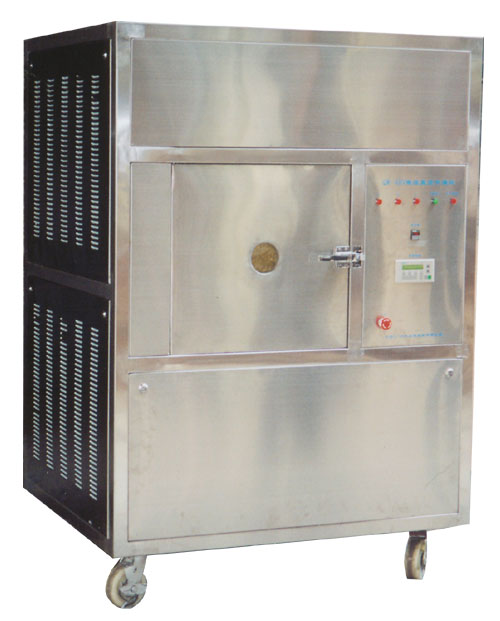
microwave sterilization and preservation
1, short time and fast
Conventional thermal sterilization transfers heat from the surface of food to the interior through heat conduction, convection or radiation. It often takes a long time to reach the sterilization temperature. Microwave sterilization is the direct interaction between microwave energy and microorganisms such as food and bacteria. Thermal and non-thermal effects work together to achieve rapid heating sterilization. The treatment time is greatly shortened. The sterilization effect of various materials is generally 3-5 minutes. Microwave sterilization is a special thermal and non-thermal sterilization. Compared with conventional thermal sterilization, microwave sterilization can obtain the required sterilization effect at lower temperature and in shorter time. Practice shows that the general sterilization temperature can reach the effect at 75-80 C. In addition, microwave treatment of food can retain more nutrients, color, fragrance, taste, shape and other flavors, and has puffing effect. For example, the vitamin C of vegetable treated by conventional heating is 46-50%, while that of microwave heating is 60-90%, and that of porcine liver heated by conventional heating is 58%, while that of microwave heating is 84%.
3, energy saving
Conventional thermal sterilization often has heat loss in environment and equipment, while microwave is directly used to treat food, so there is no additional heat loss. In addition, the conversion efficiency from electric energy to microwave energy is 70-80%, compared with 30-50% in general.
4, uniform and thorough
Conventional thermal sterilization starts from the surface of the material, and then transmits to the interior through heat conduction. There is a temperature difference between inside and outside. In order to maintain the flavor of food and shorten the processing time, the sterilization effect is often affected by insufficient temperature inside the food. Because microwave has penetrating effect, when food is treated as a whole, both surface and interior are affected at the same time, so disinfection and sterilization are uniform and thorough.
5, easy to control
microwave food sterilization treatment, the equipment can be ready to use, there is no thermal inertia of conventional thermal sterilization, flexible and convenient operation, microwave power can be continuously adjusted from zero to rated power, transmission speed can be continuously adjusted from zero to zero, easy to control.
6, simple equipment, advanced technology
Compared with conventional disinfection and sterilization, microwave sterilization equipment does not need boilers, complex pipeline systems, coal yards and transportation vehicles, as long as it has the basic conditions of water and electricity.
7. Improve working conditions, save occupied area
equipment working environment temperature is low, noise is low, greatly improve working conditions. The operator of the whole set of microwave equipment only needs 2-3 persons. It is widely used in agaric, ginseng, flowers, onion, ginger and garlic slices. The heating, drying and sterilization of jujube slices, chili peppers, dehydrated vegetables, soybean products and other products, through microwave sterilization and preservation technology, not only won't destroy the original nutritional components of materials, but also the hygienic indicators can be completely lower than the national food hygienic standards, which can fully meet the export-grade standards of food, and greatly prolong the shelf life of food.
上一篇:Four key factors in microwave drying of jujube 下一篇:Microwave vacuum drying can solve the problem of drying Chinese herbal extract